
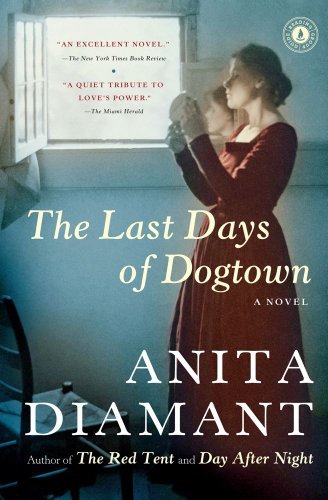
Set in early 19th-century Massachusetts, Anita Diamant’s The Last Days of Dogtown chronicles the decline of a hardscrabble settlement on Cape Ann. Once an inland farming community that eventually turned into a desolate ghost town, the area becomes a refuge for society’s castoffs and a poignant backdrop for a dying way of life. Dogtown, pejoratively named for the roaming packs of abandoned strays that haunt its streets, is a rugged enclave. It is populated by a marginalized community consisting of widows, orphans, prostitutes, spinsters, free Africans, and supposed witches.
Excluded from the more prosperous coastal fishing towns of Massachusetts, these outcasts eke out a meager existence on barren soil. Despite the harshness of their environment, they form a tight-knit but fiercely independent community. The narrative unfolds through a series of vignettes spanning the early 1800s to 1830, detailing the lives of Dogtown’s diverse residents.
Central to the story is Judy Rhines, a sweet, lonely, and fiercely independent woman whose life is shaped by an unrequited, thwarted romance with Cornelius Finson, a freed African man. Though they share a brief period of happiness, mounting racism and societal pressure eventually force them apart. Other notable characters include Black Ruth, a reserved woman who dresses in men’s clothes and works as a stonemason; Mrs. Stanley, a local madam; and Oliver Younger, who endures a miserable, abusive childhood under the watch of his bitter aunt.
Diamant weaves these individual struggles together, grounding the fiction in the real, documented history of Dogtown’s decline. The dogs of the settlement—particularly Greyling, a stray adopted by Judy—symbolize resilience, offering comfort and loyalty when human connections are cut short by prejudice and poverty.
The overarching tone of the novel is elegiac and melancholy. It lacks a singular sweeping plot, instead serving as a quiet, character-driven tribute to a lost way of life. As the years pass, Dogtown’s fate is sealed by societal shifts, brutal winters, and relentless isolation. One by one, the residents die off or leave for more prosperous towns. The few who remain live alongside the ghosts of the past, increasingly transparent and displaced as the wider world modernizes and forgets their existence.
Ultimately, The Last Days of Dogtown is not a story of triumphant happy endings, but rather an authentic, bittersweet exploration of human resilience. It celebrates the inherent dignity and defiant lives of society’s overlooked members, capturing the haunting, forgotten history of a marginalized crevice of early American life