
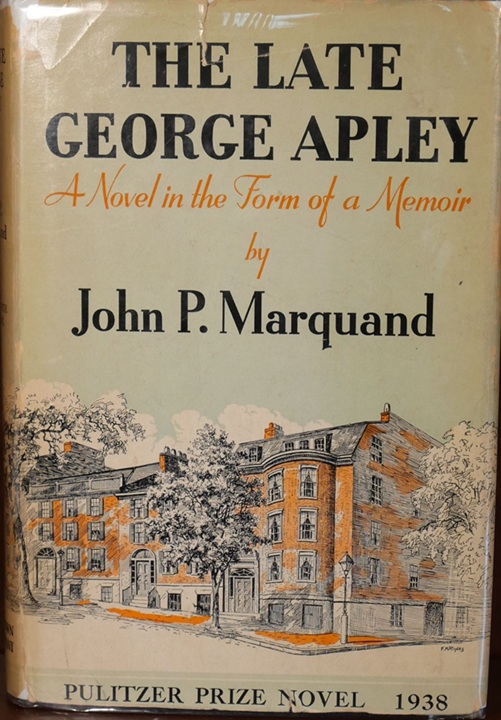
Published in 1937, The Late George Apley by John P. Marquand is a satirical yet affectionate portrait of Boston’s upper-class society and the values that shaped it during the late nineteenth and early twentieth centuries. Presented as a fictional biography compiled after George Apley’s death, the novel traces the life of a man whose personal desires are often constrained by the expectations of family, social status, and tradition.
George Apley is born into a wealthy and respected Boston Brahmin family. From an early age, he is taught the importance of duty, propriety, and maintaining the family’s standing within Boston’s tightly knit social elite. Intelligent and capable, George attends prestigious schools and follows the path expected of him. Yet throughout his life, he struggles to reconcile his own feelings with the rigid conventions of the society in which he lives.
As a young man, George falls in love with a woman who is considered socially unsuitable by his family. Pressured by his parents and the expectations of his class, he abandons the relationship and eventually marries Catherine Brigden, a woman whose background and social position make her an appropriate match. Although the marriage is successful and produces children, George is left with lingering questions about the choices he made and the opportunities he sacrificed.
The novel follows George through adulthood as he establishes himself as a respected businessman, civic leader, and family patriarch. He becomes deeply involved in Boston’s institutions and charitable organizations, embodying the ideals of public service valued by his social circle. At the same time, Marquand highlights the limitations of this world. George frequently finds himself uncomfortable with changing social attitudes, new cultural influences, and challenges to traditional hierarchies.
Much of the novel’s humor comes from the contrast between George’s sincere attempts to do what is right and the often absurd rules governing Boston society. Through letters, anecdotes, and commentary from the fictional biographer, readers gain insight into George’s private thoughts as well as the public image he carefully maintains. Marquand uses these episodes to satirize social pretensions while also portraying George as a fundamentally decent and sympathetic man.
As George grows older, he watches his children navigate a changing America. Their choices often conflict with the values he inherited, forcing him to confront the possibility that the world he represents is fading away. By the time of his death, George has become both a symbol of Boston’s old aristocracy and a figure whose life reveals its strengths and shortcomings.
Winner of the Pulitzer Prize for Fiction in 1938, The Late George Apley remains a witty, insightful examination of class, tradition, and personal sacrifice in American society.