
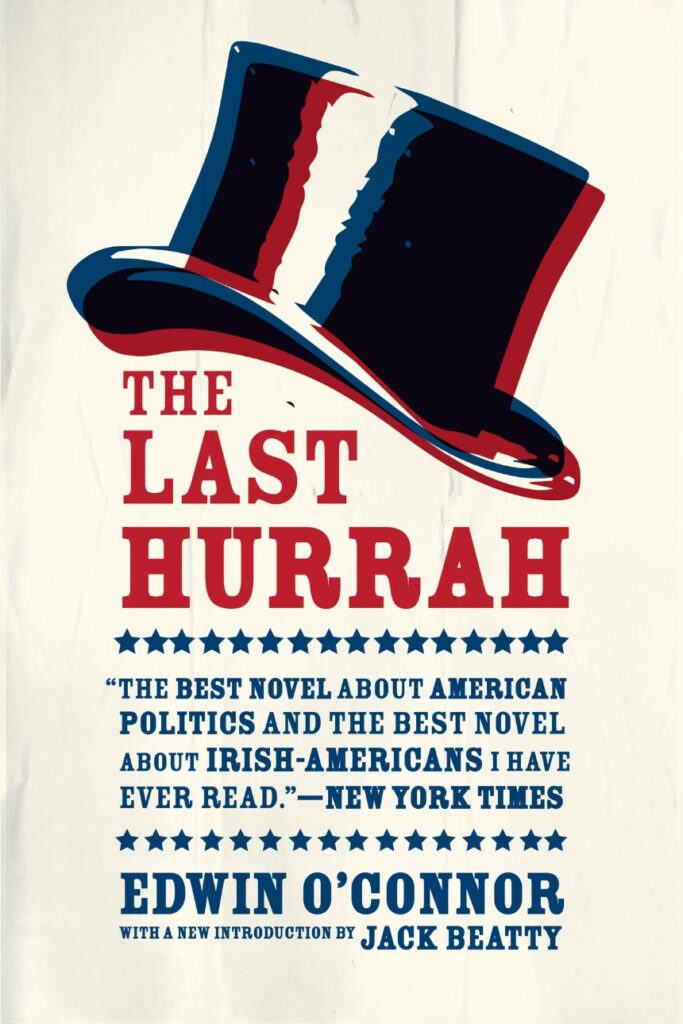
Published in 1956, and set just a few years prior, The Last Hurrah is Edwin O’Connor’s classic political novel about the rise and decline of old-style urban politics in mid-twentieth-century America. Set in an unnamed New England city modeled closely on Boston, the story centers on Frank Skeffington, a charismatic, aging Irish American mayor preparing for what may be his final campaign.
The novel is narrated by Adam Caulfield, Skeffington’s young nephew, a newspaper editor who observes the mayor’s political operation from the inside. Through Adam’s eyes, readers gain a detailed view of machine politics, ethnic loyalties, personal relationships, and the changing nature of American public life.
Frank Skeffington has spent decades building a powerful political organization. He rose from humble immigrant roots to become one of the city’s most influential figures, earning a reputation as a champion of working-class citizens, immigrants, and the poor. Skeffington understands people instinctively, remembers names and personal histories, and uses his political skills to forge lasting bonds with voters. While critics accuse him of patronage and backroom dealing, his supporters see him as a genuine public servant who helps ordinary people navigate the complexities of government.
As the election approaches, Skeffington faces a formidable challenge. A coalition of wealthy businessmen, reformers, and media interests seeks to end his reign. His opponent, Kevin McCluskey, lacks Skeffington’s political instincts but benefits from modern campaign techniques, extensive financial backing, and favorable television coverage. The campaign becomes a contest between two eras: the personal, neighborhood-based politics of the past and the increasingly corporate, media-driven politics of the future.
Throughout the novel, O’Connor explores the city’s rich ethnic and social divisions. Irish Americans, Yankees, Catholics, Protestants, labor leaders, journalists, and business elites all play roles in the unfolding drama. Skeffington moves comfortably among these groups, displaying both political cunning and genuine warmth. Yet age, illness, and shifting public attitudes gradually erode his influence.
As Election Day arrives, Skeffington’s formidable political machine struggles against forces it cannot fully control. The outcome reflects broader changes occurring throughout America as traditional urban political organizations lose power and television, public relations, and modern campaign strategies gain prominence.
The novel’s climax is both political and deeply personal. Skeffington confronts the end of an era and the reality that the world he helped shape is disappearing. Despite his flaws, he emerges as a complex and sympathetic figure whose dedication to public service cannot be dismissed.
The Last Hurrah is widely regarded as one of the finest American political novels. Combining humor, nostalgia, sharp social observation, and memorable characters, it offers a compelling portrait of democracy, leadership, and political change in twentieth-century America.