
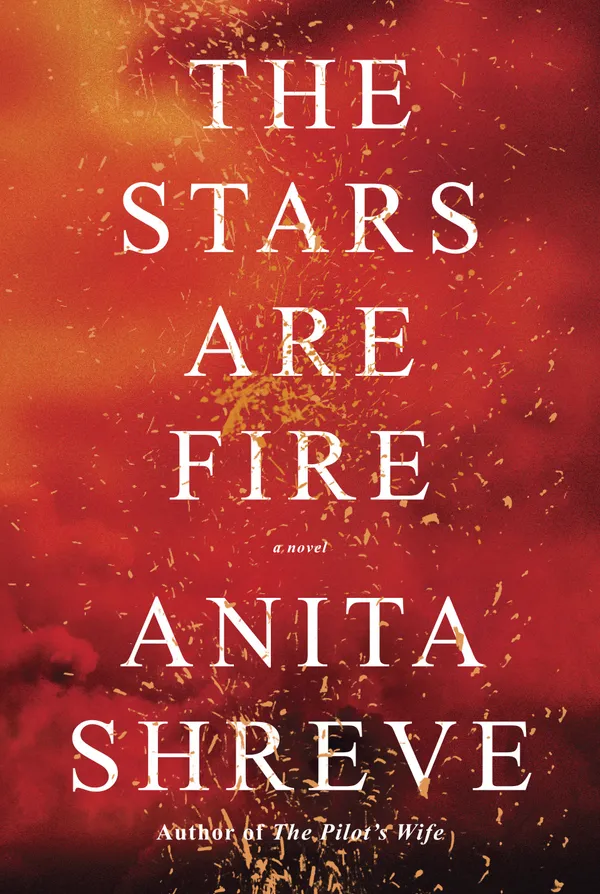
In Anita Shreve’s 2017 historical novel, The Stars are Fire, Grace Holland is a young, pregnant homemaker living a stifling existence in a passionless marriage to her surveyor husband, Gene. Set on the coast of Maine in 1947, the narrative centers on Grace’s transformation from a subservient wife to an independent, self-reliant woman in the wake of a devastating tragedy.
The inciting incident occurs when a historic summer-long drought gives way to massive, out-of-control wildfires that sweep through her community. With Gene off volunteering to fight the blaze, Grace is left entirely alone to protect her two toddlers. As the flames destroy their home, she makes a harrowing escape to the seashore, where she and her best friend, Rosie, spend a terrifying night huddled under soaked blankets with the freezing ocean at their backs.
By dawn, Grace and her family survive, but they have lost nearly everything. Tragically, the trauma of the fire causes her to lose her unborn baby. Compounding the loss, Gene never returns and is presumed missing. Homeless and abruptly thrust into the role of a single mother, Grace is forced to navigate an entirely new, challenging reality. She moves into her late mother-in-law’s empty seaside mansion. There, she begins a process of profound personal emancipation.
For the first time in her life, Grace learns to drive, finds a job, manages her own finances, and begins to taste true freedom and agency. She also discovers unexpected companionship and brief romantic interludes with a concert pianist who has been squatting in the mansion. Just as Grace begins to thrive and find joy in her newly built, independent life, her circumstances are upended once more. Gene finally reappears, physically injured from the fires and emotionally scarred. His return directly threatens the hard-won autonomy she has cultivated, and Grace is pressured to slip back into her former subservient role as an obedient wife.
Rather than succumbing to the limitations of her previous existence, Grace taps into a deep reservoir of courage and inner strength. She ultimately chooses to assert her independence over the rigid expectations placed upon her gender, making a bold, life-altering choice to leave her husband. A poignant tale of female resilience, survival, and empowerment, The Stars are Fire concludes with Grace fully embracing the limitless potential of her own self-determined future.