
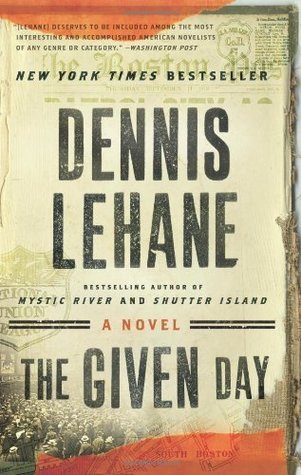
Set in post-World War I Boston, Dennis Lehane’s The Given Day is a sweeping historical epic that blends real and fictional characters during a year of unprecedented social upheaval.
The narrative centers on two men on parallel paths: Danny Coughlin, an idealistic Irish-American beat cop and son of a prominent police captain, and Luther Laurence, a talented Black baseball player from Tulsa who is fleeing a violent criminal syndicate.
In 1918, the country is wrestling with explosive labor strikes, the Red Scare, and the devastating Spanish flu pandemic. Danny is pressured by his father and a young J. Edgar Hoover to go undercover and infiltrate left-wing labor unions and radical groups. However, as Danny witnesses the dire poverty and oppression of the working class, he increasingly sympathizes with the Boston Social Club, a nascent police union fighting for fair wages and conditions.
Meanwhile, Luther travels to Boston seeking safety and takes a job working as a driver for the Coughlin family. He strikes up a profound friendship with Danny and Nora O’Shea, a resilient domestic worker who shares a complicated romantic history with the Coughlin family. Through Danny and Nora, Luther discovers the early NAACP and finds himself drawn into the broader civil rights struggles of the era.
These intertwining storylines collide during the historic 1919 Boston Police Strike. When the police force walks off the job, the city descends into anarchy, rioting, and looting. During the chaos, martial law is declared. Danny finds himself labeled a traitor and a pariah by his own family and department, while Luther is forced to confront the brutal realities of a racist society and the fragility of Black safety.
Ultimately, The Given Day explores the collision between institutional power and individual integrity. As society fractures around them, Danny and Luther step outside the rigid boundaries of their given stations and form an unlikely, steadfast bond. Through riots, disease, and political betrayal, the novel traces their difficult paths toward personal redemption, illustrating how marginalized voices must fight for dignity and justice in an unyielding world.