
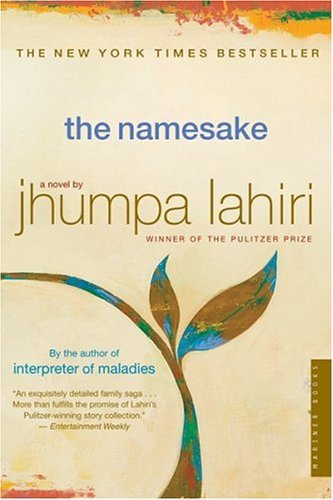
Jhumpa Lahiri’s The Namesake, published in 2004, is a multigenerational novel about identity, immigration, family, and the complicated process of finding a place between two cultures. Spanning several decades, with parts set in both India and the United States, the novel follows the Ganguli family as they build a new life in America while remaining deeply connected to the traditions and expectations of their Bengali heritage.
The story begins with Ashima and Ashoke Ganguli, a young Bengali couple who move to Cambridge, Massachusetts, after their arranged marriage. Ashoke is studying and building a career in the United States, while Ashima struggles with the loneliness and disorientation of living far from her family and familiar culture. Their first child, a son, is given the unusual name Gogol.
The name becomes central to the boy’s struggle with identity. Gogol’s name comes from the Russian writer Nikolai Gogol, whose work has particular significance for his father because of a traumatic experience in Ashoke’s past. Yet Gogol grows up in suburban Massachusetts and feels increasingly uncomfortable with a name that seems neither traditionally Bengali nor comfortably American. As a teenager and young adult, he begins using the name Nikhil, hoping to create a separate identity and distance himself from the expectations associated with his childhood.
As Gogol grows older, his relationship with his parents becomes increasingly complicated. He is embarrassed at times by their customs and their close-knit Bengali community, while simultaneously feeling an attachment to the culture he has tried to leave behind. His younger sister, Sonia, experiences many of the same tensions but develops a somewhat easier relationship with her dual cultural identity.
Gogol’s romantic relationships further illuminate his struggle. His relationship with Maxine, a young woman from an affluent American family, draws him deeply into a world that is very different from his parents’ Bengali-American community. For a time, he imagines that he can create an entirely separate life. But a devastating family tragedy forces him to reconsider his relationship with his parents and the past he has attempted to escape.
After his father’s death, Gogol begins to understand the meaning behind his name and the sacrifices that shaped his family’s life in America. The story gradually becomes less about rejecting one identity in favor of another and more about accepting the many influences that have made him who he is.
The Namesake is ultimately a novel about belonging. Lahiri portrays immigration not simply as a physical journey but as an ongoing negotiation between generations, cultures, languages, and memories. Through Gogol’s experience, she explores how names can carry history, how families transmit both love and expectations, and how adulthood can bring a deeper appreciation for the heritage once taken for granted.