
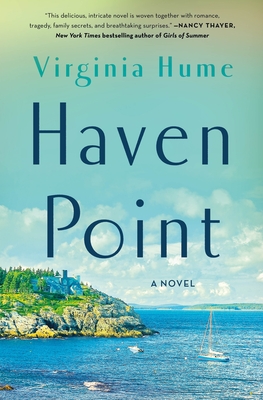
Virginia Hume’s Haven Point, published in 2021, is a multigenerational family saga about inheritance, memory, privilege, and the complicated bonds that hold families together. Moving between the mid-twentieth century and the present day, the novel centers on the Winthrop family, whose privileged New England upbringing has been shaped by tradition, wealth, and the imposing presence of their summer home on the coast of Maine.
At the heart of the story is Alice Winthrop, a woman whose life has been deeply influenced by her family and by Haven Point, the beloved coastal property where generations have gathered. Alice has spent much of her life accepting the expectations placed upon her, particularly those concerning marriage, motherhood, family loyalty, and social position. Yet beneath the polished surface of her life are disappointments and secrets that have never been fully acknowledged.
The novel gains much of its emotional power from its exploration of Alice’s relationships with the people closest to her. Her marriage, friendships, and connections with her children reveal the ways in which affection can coexist with resentment, obligation, and misunderstanding. As the family changes over the decades, younger generations begin questioning the traditions and assumptions that their parents and grandparents accepted without protest.
Haven Point itself becomes a sort of character in the story. The house and surrounding landscape represent stability and continuity, but they also embody the weight of the past. Family members return there year after year, carrying old grievances and unresolved conflicts with them. The property provides a refuge from the outside world while simultaneously forcing the characters to confront one another and the history they share.
As the story moves between generations, Hume gradually reveals how seemingly small decisions can have consequences that echo through an entire family. Secrets kept for the sake of protecting loved ones can ultimately create distance and misunderstanding, while attempts to preserve family traditions can become sources of conflict. The characters must decide what they owe to the past and what they are willing to change in order to create lives of their own.
Hume’s novel is ultimately less about dramatic revelations than about the quiet accumulation of choices, memories, and compromises that shape a family. Through its portrait of the Winthrops, Haven Point examines the tensions between old and new, duty and independence, and belonging and self-discovery.
There are evocative New England settings and richly drawn family relationships, Haven Point offers a meditation on the endurance of family ties. It suggests that inheritance is not simply about property or wealth – people also inherit stories, expectations, wounds, and traditions. The challenge for each generation is deciding which parts of that inheritance are worth preserving—and which must be left behind.