
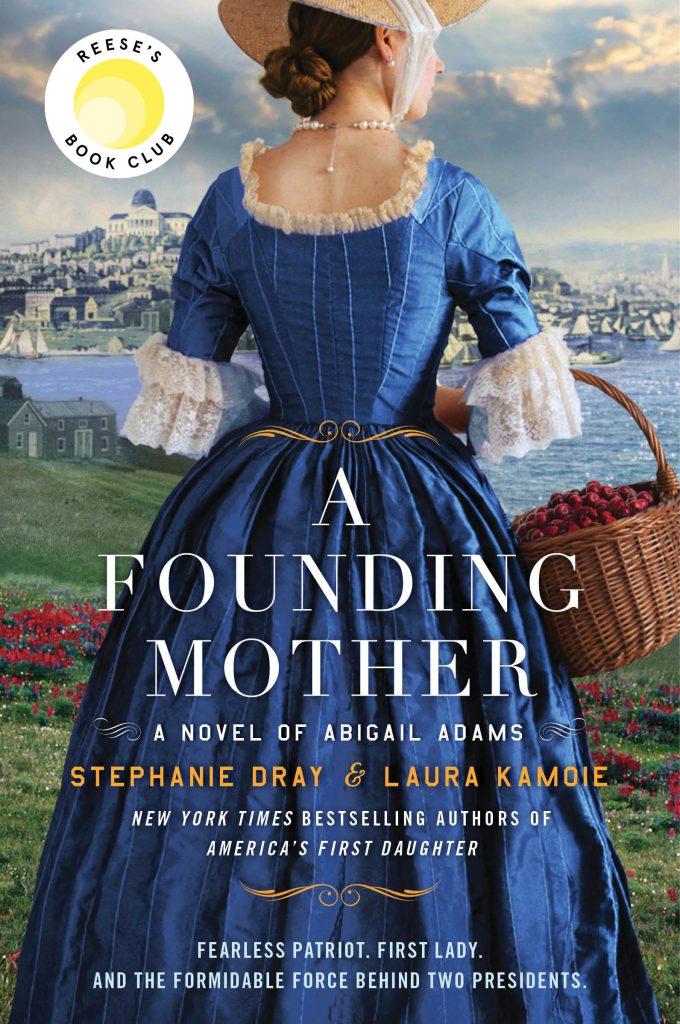
A Founding Mother by Stephanie Dray and Laura Kamoie, was published in 2026 and offers an intimate portrait of Abigail Adams, one of the most influential women of the American Revolution and the early republic. Often remembered primarily as the wife of President John Adams, Abigail emerges here as an intelligent, ambitious, and fiercely independent woman whose contributions to the founding of the United States extended far beyond her husband’s political achievements.
The story begins in 1765, when Abigail is a young bride living in Massachusetts. As tensions between Britain and its American colonies escalate, she raises her children in a world increasingly threatened by political unrest, economic uncertainty, and violence. While John Adams establishes himself as a lawyer and eventually becomes a leading advocate for American independence, his public responsibilities frequently take him away from home. Abigail must manage the household, oversee the family farm, protect her children, and maintain financial stability during years of upheaval.
Yet Abigail is more than a dutiful wife and mother. Resourceful and commercially astute, she makes investments, accumulates savings, and develops a measure of financial independence unusual for women of her era. Her responsibilities demand courage and practical intelligence, especially as war, illness, and personal loss threaten the family’s security. These experiences strengthen her determination to influence the world beyond her domestic responsibilities.
Through an extensive correspondence with John, Abigail becomes his trusted political adviser and intellectual companion. She offers candid assessments of public affairs, challenges his assumptions, and urges him to consider the rights of women as the new nation takes shape. Her famous appeal to John to “remember the ladies” reflects her conviction that a republic founded on liberty must confront the inequalities embedded in its own society. Although her husband respects her judgment, the political establishment remains reluctant to extend meaningful independence to women.
After the Revolution, Abigail enters an international world of diplomacy and politics. She exchanges ideas with Thomas Jefferson in France, navigates the complexities of British court society while John serves as minister to Great Britain, and participates in the social and political life of the emerging American government. Her experiences in New York, Philadelphia, and Washington expose her to the ambitions, rivalries, and contradictions of the nation’s leaders.
Even after John’s presidency, Abigail continues to defend her family’s interests, influence political debates, and advocate for greater opportunities for women. Her relationships with her children and their families reveal both her devotion and her imperfections, making her a complex figure rather than a distant historical icon.
Drawing on the lives of real historical figures, Dray and Kamoie portray Abigail Adams as a woman who helped shape a nation while confronting the limitations imposed upon her sex. The novel celebrates her intellect, resilience, and political courage, illuminating the often-overlooked role women played in America’s founding and asking what genuine freedom means when equality remains unfinished.