
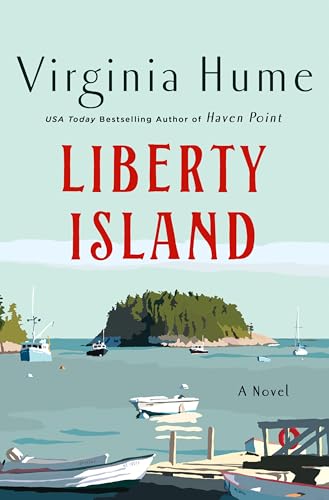
Virginia Hume’s Liberty Island is a multigenerational historical novel set along the rocky coast of Maine and within the privileged world of Boston society during the early twentieth century. Spanning 1900 and 1922, the novel explores the changing roles of women, the tension between independence and family loyalty, and the enduring search for personal freedom. Through the intertwined lives of an aunt and niece, Hume examines how the dreams of one generation can inspire, complicate, and ultimately challenge the next.
In 1900, twenty-eight-year-old Anna Bradley is a college-educated woman determined to build an independent life rather than submit to the conventional expectation that marriage and motherhood should define her future. During the summer, she supervises three young girls, including her niece, Julia Demarest, on an island near the fictional seaside community of Haven Point, Maine. Away from the restrictions of polite society, the girls delight in imaginative adventures, pretending to be pirates, treasure hunters, rum runners, and Roughriders. Their exuberant games become a source of inspiration for Anna, who recognizes the liberating possibilities of a world in which girls can imagine themselves as something more than dutiful daughters and future wives.
Drawing on these childhood escapades, Anna secretly writes a book titled Liberty Island under a pen name. Her story celebrates adventurous girls who resist the limitations imposed by society. Young readers embrace the book, making it a runaway bestseller. However, its success provokes disapproval among the influential society matrons in her sister’s social circle, who believe literature for girls should prepare them for traditional domestic roles. As Anna’s literary success grows, the danger of revealing her identity increases. A renewed encounter with a man who once captured her affections further complicates her carefully guarded independence, forcing her to reconsider her assumptions about love, marriage, and the future she wants.
The narrative shifts to 1922, when Julia, now twenty-nine, is struggling to establish her own identity amid the intellectual and cultural ferment of the postwar era. Once proud of her aunt’s celebrated books, she now regards them as outdated. Her childhood summers on the island seem less like liberation than exile, while her Boston Brahmin family represents a social order she longs to escape.
Julia’s pursuit of freedom leads to estrangement from her family and heartbreak following a failed romantic relationship with a free-spirited intellectual. When her mother, Elizabeth Demarest, urgently summons her back to Haven Point, Julia must confront the past she has rejected and reconsider what truly matters.
Through these parallel journeys, Hume portrays freedom not simply as escape from convention, but as the courage to redefine happiness, embrace complicated family bonds, and discover where one belongs. Liberty Island is ultimately a poignant story about mothers and daughters, love and friendship, and the evolving meaning of independence across generations.