
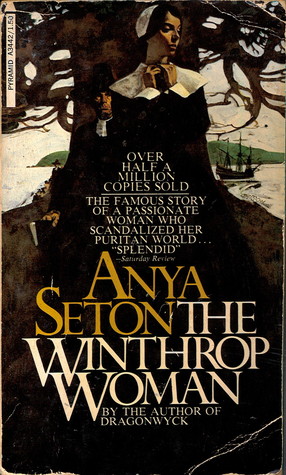
The Winthrop Woman was quite a popular book when it appeared in 1958, but it’s one of those books that is forgotten by many, except for some die-hard fans. It’s worth a look because it’s a meticulously researched historical novel detailing the life of Elizabeth Fones, a startlingly independent woman defying the rigid, dogmatic Puritan society of 17th-century New England. As the niece and daughter-in-law of Governor John Winthrop, Elizabeth’s rebellious spirit, scandalous marriages (for the time), and compassion for native people mark her as an “unregenerate” outcast within her own prominent family.
The narrative begins in England, establishing Elizabeth’s spirited youth before she marries her cousin, Henry Winthrop, and follows him to the Massachusetts Bay Colony in 1631. After Henry’s untimely death shortly upon arrival, Elizabeth is left a young widow in a harsh, unforgiving world. She struggles against the restrictive religious doctrines enforced by her uncle, Governor John Winthrop, who rules the area with iron-fisted authority. Her journey is defined by her outright refusal to conform to the strict, and let’s face it, bigoted social and religious expectations of the Puritan patriarchy.
A major turning point occurs when Elizabeth marries Robert Feake, a man who is later negatively affected by his own insecurities and the very real pressures of early colonial life. During this time, Elizabeth shows remarkable independence, befriending the outcast religious leader Anne Hutchinson and fiercely opposing the cruel, discriminatory actions of colonial authorities toward local Indigenous tribes, such as the Siwanoy. Her compassionate actions, viewed as radical by many in the local community, lead to intense conflicts with the Puritan leadership, particularly with her uncle, John Winthrop, who views her independence as dangerous and ungodly.
Throughout the novel, Elizabeth finds herself navigating three distinct marriages, enduring what becomes profound social disgrace, and facing severe economic hardships. Despite being shunned and labeled “unregenerate” by her family, Elizabeth remains resilient. Instead of focusing on her social standing, she prioritizes her conscience and the well-being of her children. Her, final, more contented marriage to William Hallett and their settlement in the more tolerant Dutch territory (now part of New York) provides a poignant conclusion to her long journey.
Seton’s novel breathes life into the realities of 17th-century colonial existence, covering the perils of frontier life, the intense religious fervor of the period, and the complex relationships between settlers and Native Americans. Elizabeth Fones is portrayed not just as a historical figure, but as a modern woman ahead of her time, fighting for personal freedom and human dignity against a backdrop of fanaticism. The Winthrop Woman is considered a masterpiece of historical fiction for its vivid, accurate depiction of the era, transforming archival records into a gripping, personal story of endurance and ultimate triumph.