
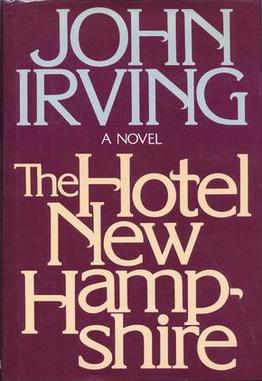
John Irving’s The Hotel New Hampshire, published in 1981, is a sprawling, darkly comedic, and eccentric family saga that explores the resilience of love, the necessity of illusions, and the chaotic nature of fate. Narrated by John Berry, the novel follows the unorthodox lives of the Berry family, led by their optimistic yet delusional father, Win, and their mother, Mary.
The Berrys are driven by a penchant for creating “hotels” out of chaotic situations, attempting to carve out a comfortable life despite recurring tragedies.The narrative begins with the eccentric Win meeting Mary and their subsequent life with five children: Frank, Franny, John, Lilly, and Egg. The family’s life is defined by bizarre experiences, including a pet bear named State o’ Maine and a “smart bear” suit worn by Susie, a young woman, which becomes a symbol of protection against a cruel world.
Following the tragic death of the mother and young Egg in a plane crash, the family fractures, with some members moving to Vienna to manage the second “Hotel New Hampshire,” a chaotic place inhabited by radicals and prostitutes. In Vienna, the Berrys confront the harshness of adulthood, navigating relationships with the radicals and prostitutes, including a sexual awakening for John and Franny, who grapple with their incestuous attraction.
The story is marked by sudden violence and trauma, including the rape of Franny and the suicide of John’s girlfriend. Yet, the family continues, with Lilly becoming a successful author, eventually committing suicide due to the pressures of life. The story follows the family’s attempts to navigate these traumatizing events, with their father, Win, often retreating into his own fantasy world.
The novel concludes with the family attempting to rebuild their lives, bringing their experiences together to create a new “hotel” in a new location. Ultimately, The Hotel New Hampshire is a testament to the idea that, in a world filled with sorrow, love and the capacity for hope are the most important things to hold onto, summarized by the mantra: “Keep passing the open windows.”