
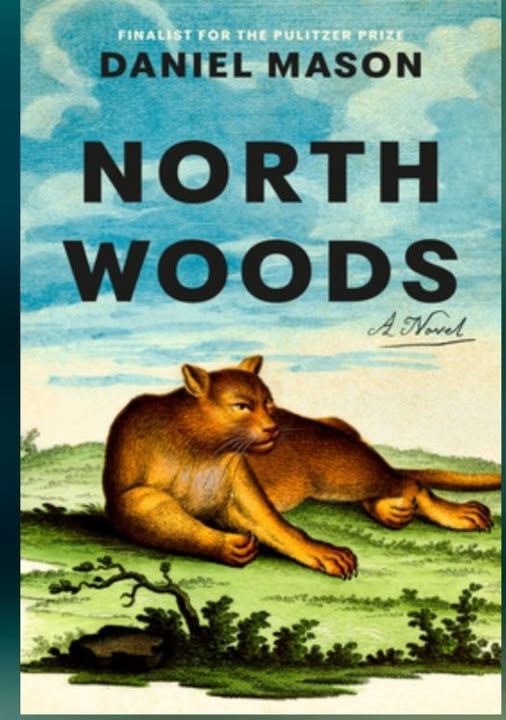
This multi-century novel by Daniel Mason is a sweeping story that chronicle the history of a single location in the forests of Western Massachusetts from the 17th century to the present day. Rather than focusing on a single family, the narrative follows a “yellow house” as it acts as a silent witness to a succession of inhabitants, both human and non-human, exploring realms of memory, nature, and the passage of time.
Published in 2025, the story begins with two young lovers fleeing from a Puritan colony in the mid-1600s. They eventually build a humble cabin in the wilderness. This initial, desperate, and hopeful act sets the stage for a haunting, interconnected, and often humorous tapestry of lives. Following the lovers, the land is occupied by a variety of residents, including an English soldier who abandons the Revolutionary War to cultivate a legendary apple orchard, and his twin daughters who live in a codependent, tumultuous relationship.
Mason expands the narrative beyond traditional human history, offering perspectives from the natural world, including a stalking panther, a fungus, and a “lusty” beetle whose life cycle mirrors the ecological decay and renewal of the surrounding forest. As centuries pass, the cabin transforms and inhabitants change, including a fraudulent spiritual medium, a pair of men in a forbidden relationship, a fugitive slave, and a soldier suffering from PTSD. Each resident is shaped by the land, and in turn, leaves their own mark on it, contributing to a sense of a place heavily burdened by its past.
The novel’s structure is unconventional, told through vignettes that sometimes take the form of letters, diary entries, botanical notes, and even a newspaper column, reflecting the evolving nature of communication and human life during the passage of time. A key thread involves the “yellow house” itself, which stands through periods of prosperity, neglect, and near-collapse, sometimes serving as a secluded sanctuary, and at other times, a site of sorrow.
In the modern era, the house is no longer a home but a ruin, studied by a botanist researching disappearing ephemeral plants and an amateur historian tracing the area’s forgotten, often violent past. Ultimately, North Woods is a meditation on the idea that while individual lives are transient, the land remains, holding the memory of those who came before. It suggests that the only way to understand the world is not through a lens of permanent loss, but as a perpetual, flowing tale of change.